
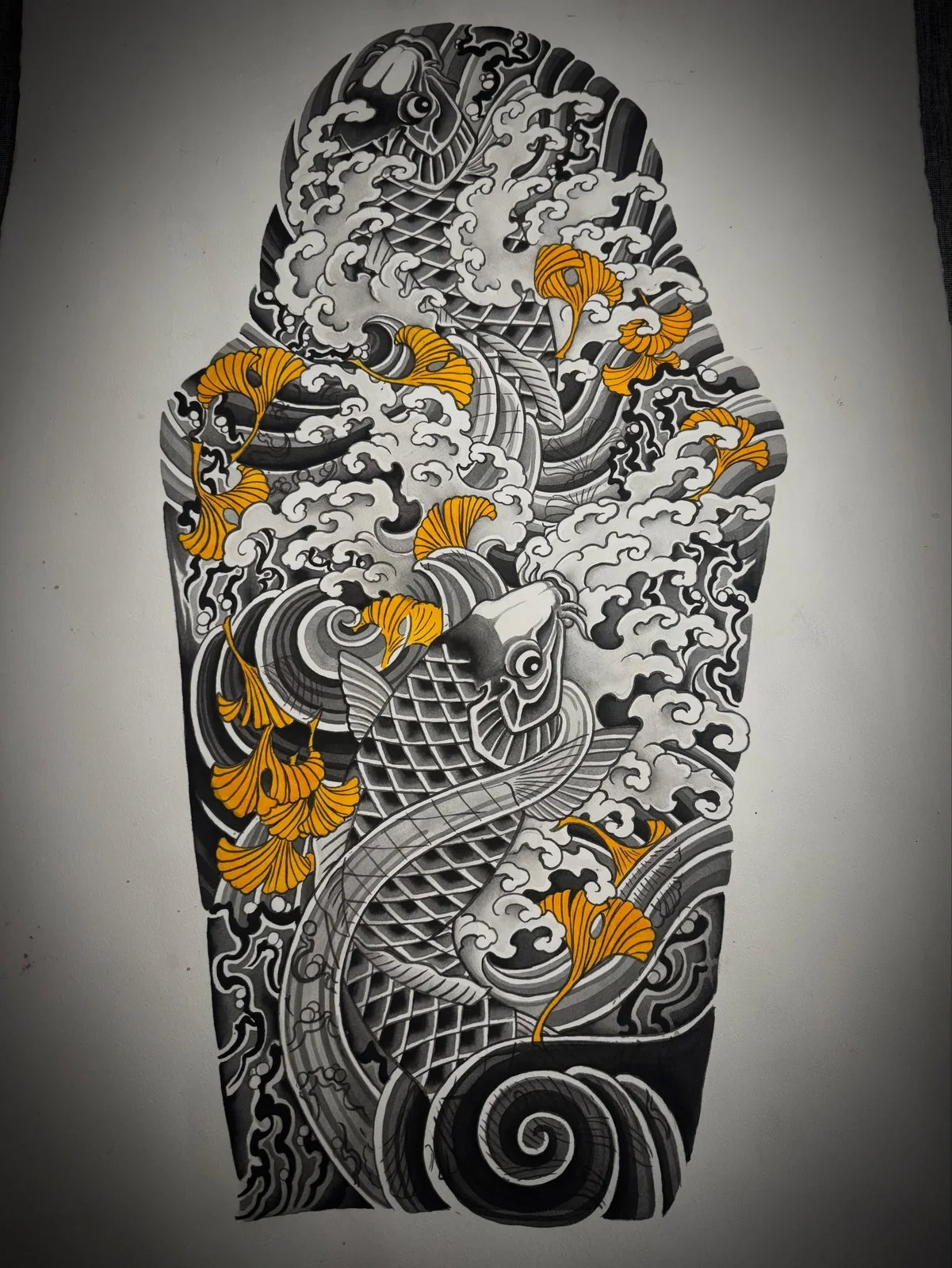
So after years of battling with converting a loose collection of smaller, one-shot tattoos into a full sleeve composition, I figured it was time that I try to tackle this dilemma head-on. So in my opinion, your whole arm can be tattooed, but if it’s not one composition, it’s not really a sleeve. On some level it is in the sense of full arm coverage, but it’s not one cohesive image and typically they just don’t have the flow or fit the form and shape of the arm as well as something that was a premeditated whole arm composition. You might be able to get some elements of flow, but often with the smaller random unplanned tattoos already existing, you’re going to have to cut some corners and do some things in a way that you probably wouldn’t if proper planning would have been implemented, but sometimes in tattooing you just have to work with what you have. Building upon existing tattoos is part of tattooing and in no way am I insinuating that I’m above this kind of work. This blog is just expressing my personal opinion based on observations from almost a quarter century in tattooing about making better choices. These are things I wish I would have known when I was younger and would have had the foresight to take into consideration when tattooing my arms. Even in styles like American Traditional where it’s pretty common to not use large format imagery and have more of a patchwork ascetic, proper planning can be the difference in an okay vs. a great tattoo composition. I wanted to take this opportunity with my first blog to put this out in the ether in an attempt to educate people and help them make wiser choices in regards to your tattoos. My suggestion is to start thinking about the bigger picture when planning these things out.
So what is flow in tattooing?
In the structural design of large-format tattooing, there are underlying forms in the anatomy and universal rules for image composition that determine how things should be designed. By following these rules, you compose images that coincide with the shape and form of the body, are just more aesthetically appealing, and create the feeling and visual appearance of movement within the design. This is flow. Abstractly, the process in which your brain processes the visual information observed through your eyes that creates the illusion of action and rhythm in a static image. When sleeves are approached as one composition, all of the design elements of flow are going to be way more apparent than just throwing some random background that will fit with existing small one-shot tattoos. Like I said previously, you might be able to get some element of flow, but typically it’s just not the same.
How Japanese tattooing builds flow
In Japanese tattooing, flow is usually established through the use of the background elements in conjunction with foreground imagery. Both are composed with the shape, form, and anatomy of the body in mind. The use of wind bars, water, clouds, smoke, and negative space tie everything together and make the image read as one composition. My focus is on Japanese tattooing, and this blog is written in the context of that focus, but these concepts apply to ALL TATTOOING. When you have a random collection of one-shot tattoos, you often end up with competing focal points between the motifs, which clash with the structural anatomy and are just harder to visually process. More often than not, you end up having uneven/awkward spacing and gaps, which in turn usually end up leading to some kind of awkward use of negative space in background elements. One misled bad decision leads to another, and it has a compounding snowball kind of effect, unfortunately. But circling back to my previous statement, you just have to work with what you have in some situations. At this point in time, because of the rise in popularity and amount of tattooing happening now, blank arms are way less common now. This is why it’s so critical to plan these things out beforehand and take into account the direction you’re trying to go with either your whole arm, bodysuit, etc. Even if you don’t have whole limbs available to be tattooed anymore, these are great things to take into consideration to make the most of the space you have left.
The rules are universal.
The rules and shapes/forms that determine the flow of a body part are universal in composing tattoos. These are concepts that would apply to everything from Traditional Japanese to Bio-mechanical tattooing. These are just universal truths in composition, and there are several concepts like the golden ratio or the rule of thirds and other art/composition theories that apply to all of this. I won’t really get into all of them because this blog is intended for educating clients and not a tutorial on how to compose sleeves. If you are planning your next piece, plan the whole composition first, and the tattoo will age and read better for it.
Now booking custom Japanese sleeves, back pieces, and cover ups at Remington Tattoo in North Park. Bring your references to a consult and we will plan the whole composition together.
