
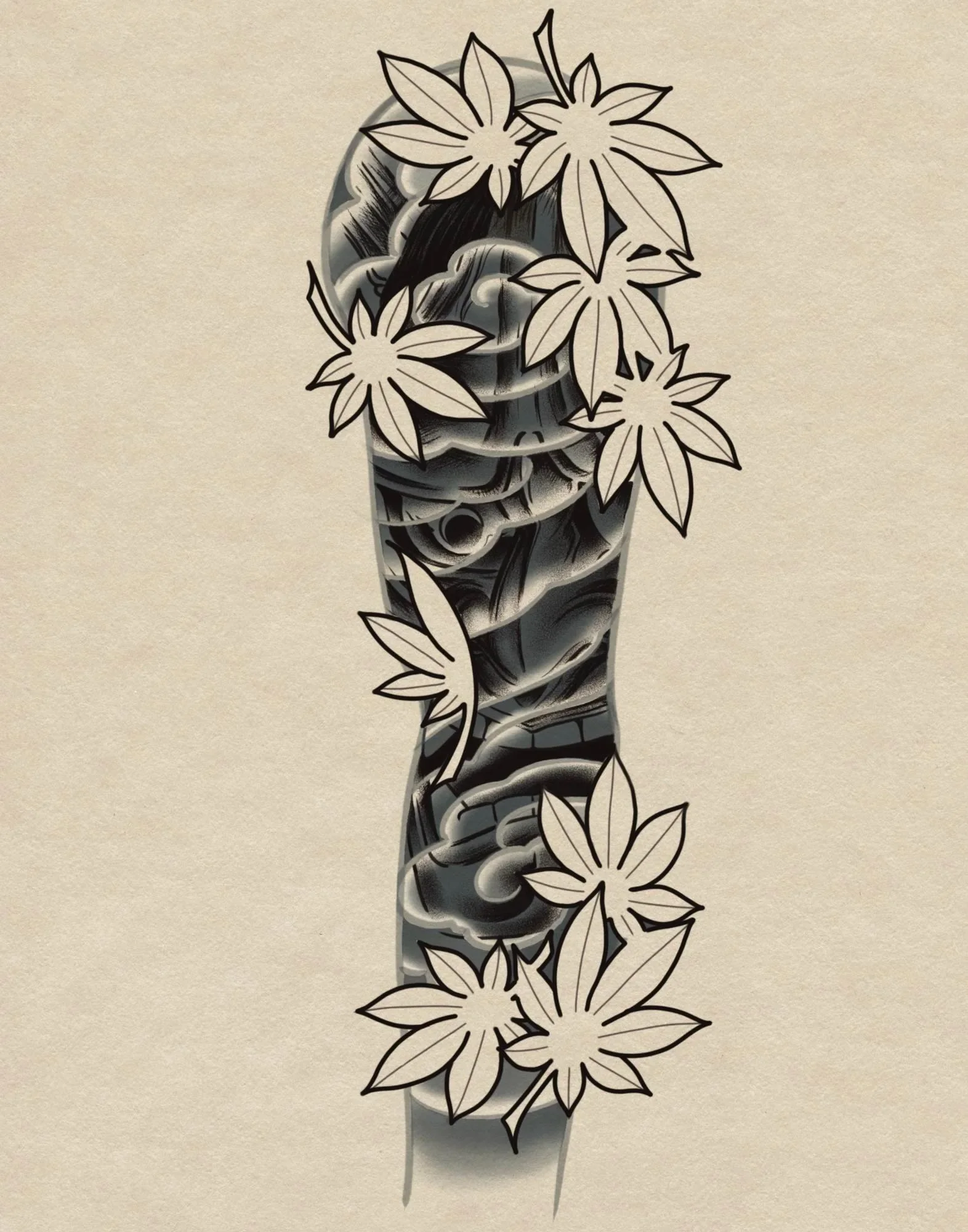
Currently available tattoo concept design of a Hannya and maple leaves by Brett Semrick
So in this blog I decided to cover the subject of the Hannya Mask. It’s one of the more popular motifs in Japanese Tattooing and also one of the most misunderstood. With their horns, fangs, and iconic expressions, it’s hard not to be captivated by these mysterious masks. In this long winded rant about tattoo related topics, I’ll be going over the origin, meaning, and why the Hannya works so well in tattooing.
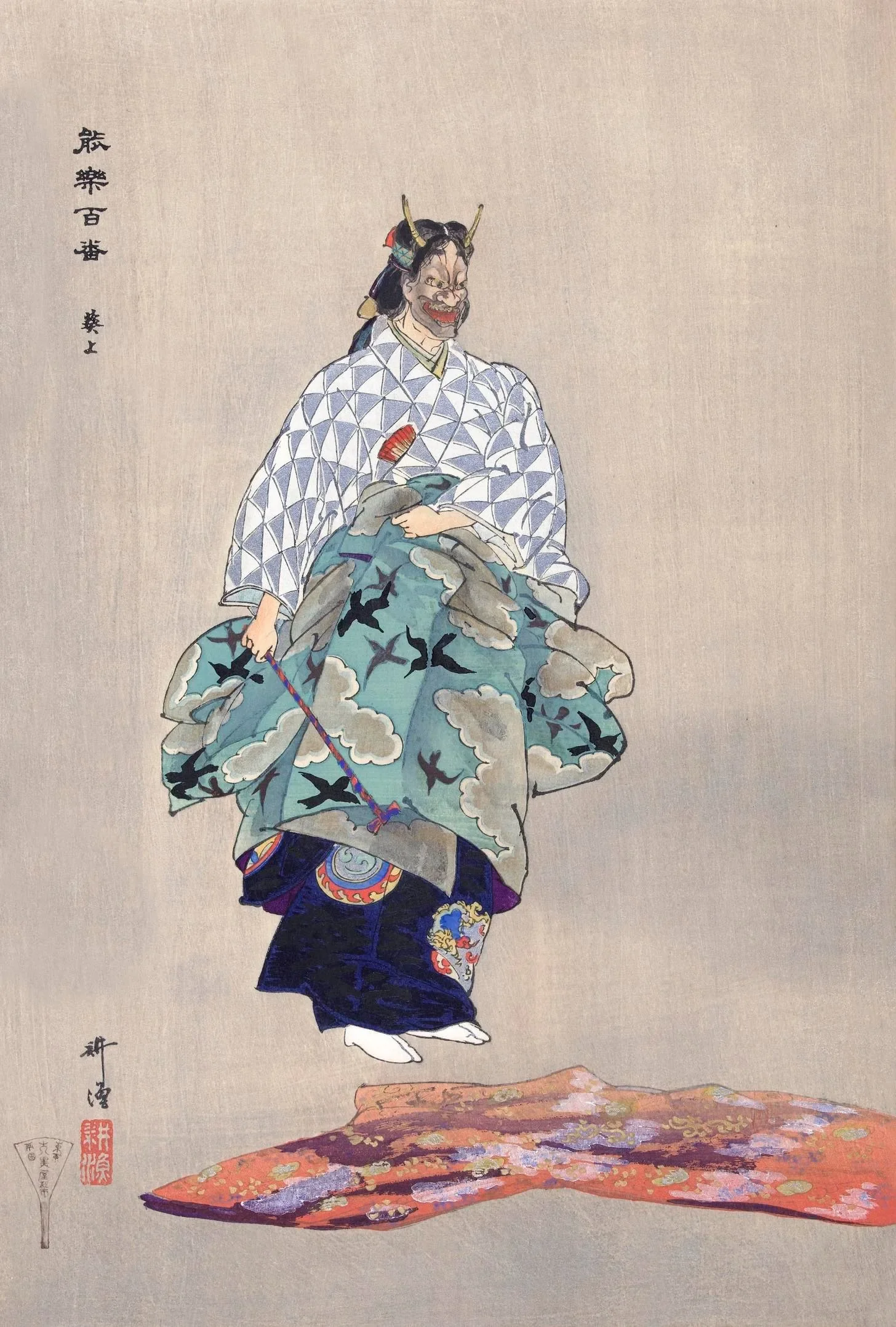
Scene from the Noh theater play Aoi no Ue (Sep–1922) by Kogyo Tsukioka. Original from The Rijksmuseum. Digitally enhanced by rawpixel.
The Origin
The origin of the Hannya mask can be traced back to 14th-century Japan and is often attributed to a monk and mask carver named Hannya Bō. The Hannya is a stock character in Noh theatre, which is designed to be read from a distance; hence the exaggerated features. The mask itself does not have one static expression. Depending on the vantage point of the viewer, it can be interpreted as anger from below with its snarling mouth, or as sadness from above expressed by the downturned brow. It is used in plays such as Aoi no Ue and Dōjōji, in which the character becomes transformed through overwhelming emotion.
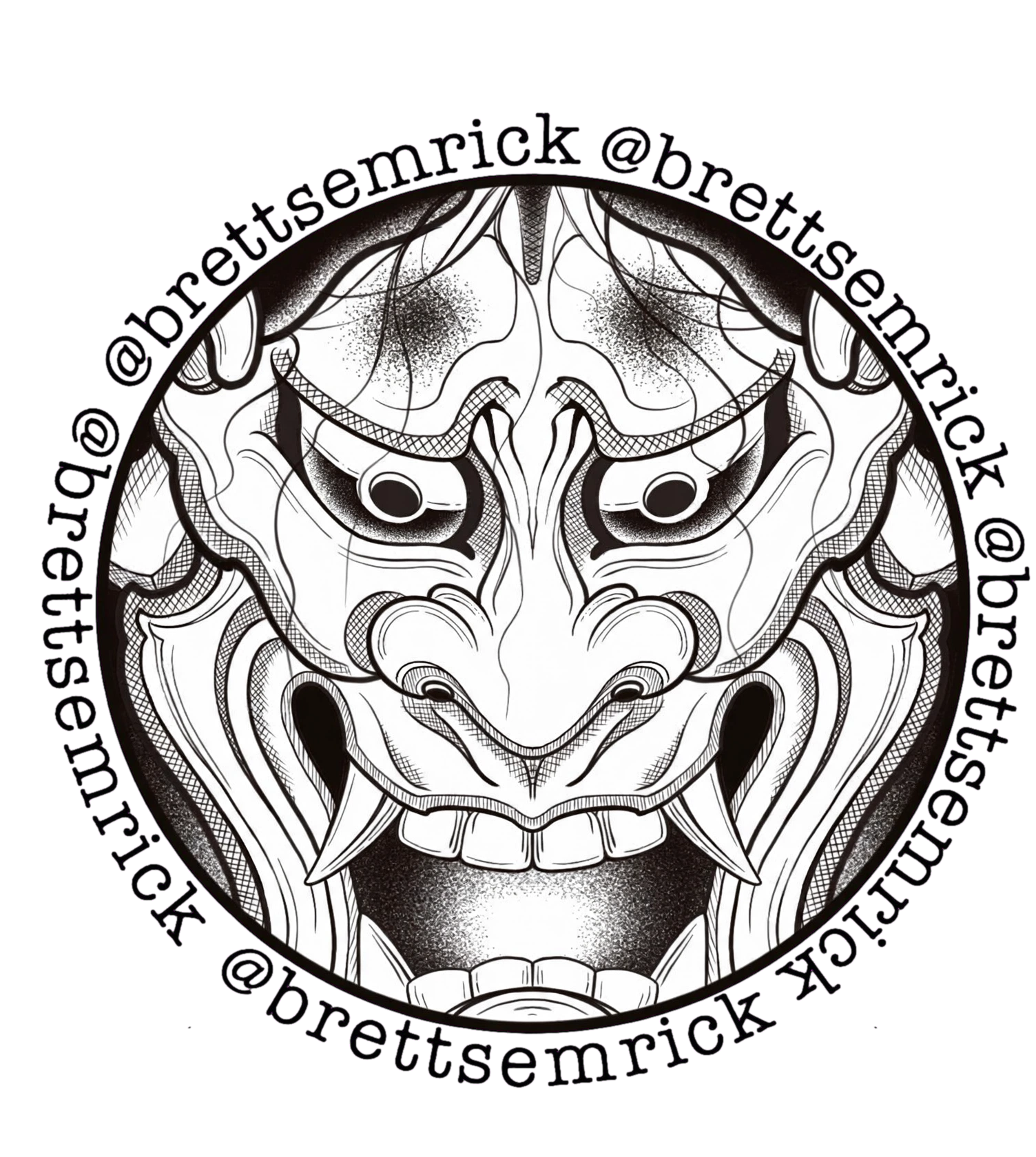
Hannya Mask Logo by Brett Semrick
The Meaning
Hannya are the representation of a human woman so consumed by jealousy, anger, sadness, and despair that she transforms into a demon. Hannya are often confused with oni, which are supernatural ogre‑like demons associated with folklore and which also serve as torturers in Buddhist Hell. Some well‑known oni in folklore are Raijin and Fujin.
In tattooing, the symbolism of the hannya can be read as a talisman against jealousy and evil. It also serves as a reminder of the dangers of these emotions. Traditionally, Hannya are represented in three different phases that show the progression toward becoming a full demon.
Three Phases of Hannya
Shiro Hannya (white): The earliest stage — still considered to be human.
Aka Hannya (red): Expressing deeper rage and obsession — well on the way to becoming a demon.
Kuro Hannya (black): The final transformation — fully consumed by emotion and no longer human.
These are things to take into consideration when picking a version for your tattoo. You’ll often see hannya in other colors, which is fine if you aren’t adhering to the rules of traditional Japanese tattooing. But if you want a more authentic irezumi aesthetic, I would definitely take heed when making this decision.
I wish I had known this as an 18 year old getting one on my forearm. It ended up being a design that everyone attributed more to a monster from Where the Wild Things Are than to a Hannya. My only knowledge at the time came from tattoo magazines. I just thought it was a cool Japanese design. But I digress.
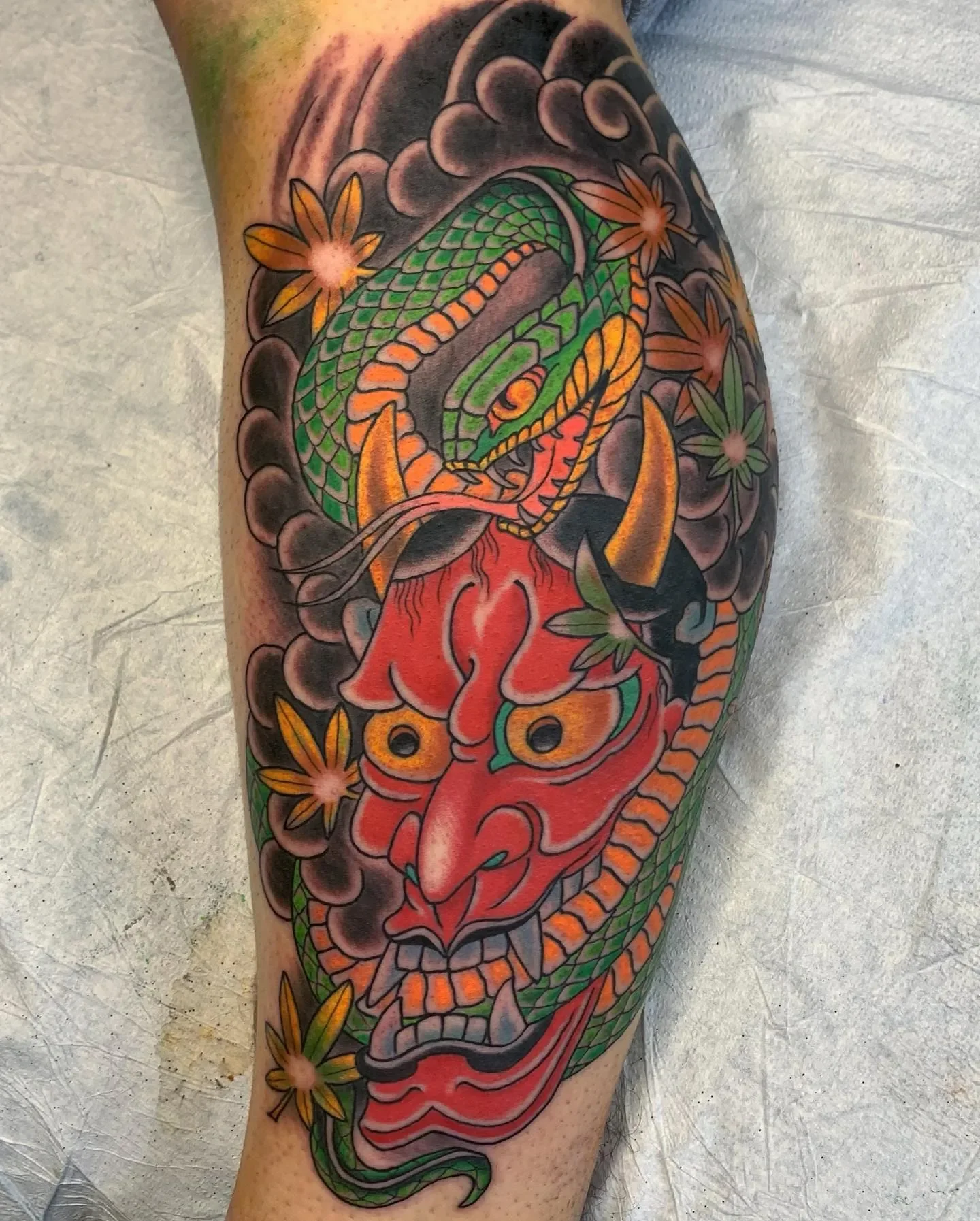
Red Hannya paired with a snake and maple Leaves by Brett Semrick
Why I Love Tattooing Hannya
Hannya have a long history in Japanese tattooing. In addition to pairing well with elements like cherry blossoms, snakes, and maple leaves, they are just inherently awesome looking. This iconic image works well in both black & grey and color.
The variability of the expression is part of the challenge in drawing Hannya and makes each one unique. Subtle changes in the shape of the facial features can completely change the vibe of the design. I feel this is what keeps it an interesting subject to work with and why I still enjoy doing them after so many years. Hannya lend themselves to both smaller, one-shot pieces and larger format work. They can work well as a standalone arm, leg, chest, or full back piece with or without background elements.
Want a Hannya Tattoo?
If you’re considering a Hannya for your next tattoo, I think it’s a great choice. They are truly timeless tattoos that when done properly age well and will be something to enjoy for years to come.
You should consider what elements you want it paired and what kind of expression you want to convey. Paired with cherry blossoms or maple leaves it symbolizes impermanence or the passing of time. Hannya also pair well with other motifs like snakes, koi, and other botanical imagery.
Is this tattoo supposed to a symbol of protection or a warning to the dangers of succumbing to your emotions? Are you wanting this as a smaller one-shot tattoo or something that will be part of a larger composition like a sleeve or a back piece?
Book a Consultation
These are all questions I would gladly go over with you in a consultation about your next tattoo. Consultations are free and I will sit down with you and go over all the details about your design and what your options are.
If you’re interested in setting something up, I’m now booking appointments in San Diego at Remington Tattoo. You can reach me through my contact page to start the conversation.
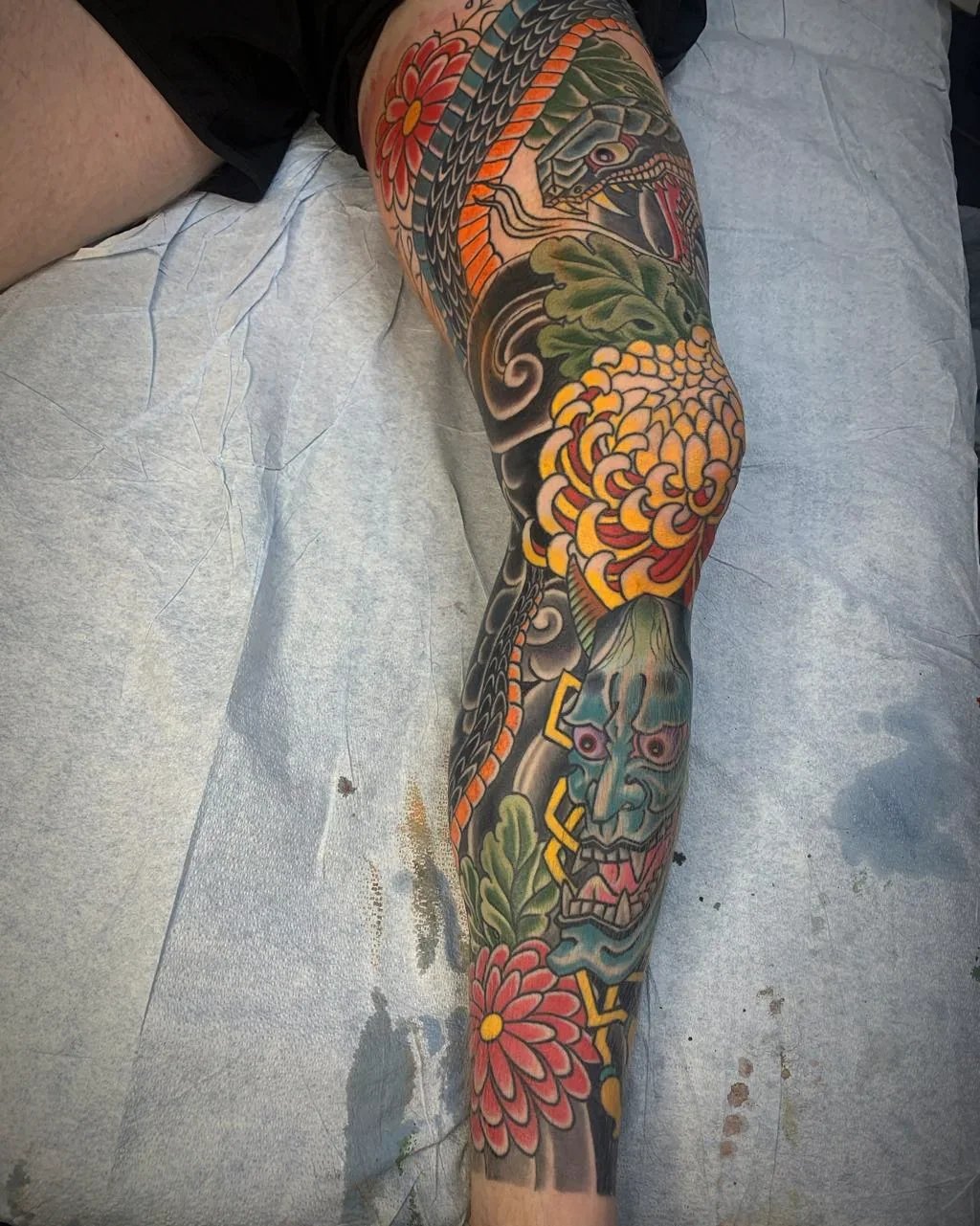
In process leg sleeve with Hannya, Snake, and Chrysanthemum by Brett Semrick
Ready to start you next Japanese Tattoo?
Want to see more Japanese Tattoos?
